Category Archives: Activities and Games

Verb Form Writing and Speaking Activity-Interactive Powerpoint

This is an engaging class activity to review and reinforce verb forms. The teacher divides the class into teams (ABCD). Teams choose a square and say the number of the square  and either say or write the correct verb form. The teacher clicks the square (while in slideshow mode) to reveal the correct answer and the points that the team earns. The point values are arbitrary and meant to add a bit of excitement to the game. If the team is correct, the teacher types the score in the box next to the team letter. The team with the highest score at the end wins.


French & Spanish Speaking Activity: Shipwreck

Your students will build their proficiency, polish their skills and create increasingly complex sentences with this dynamic and interactive speaking activity. Naufragio/Naufrage encourages strategic thinking and friendly competition.

Let’s take a look at how it works:

  • In each of the squares, there are pictures, numbers, time or subject/infinitive. Whatever the theme is that students are working on. Students play against an opponent or two and each player has a different colored pencil.
  • Player 1 begins by choosing a box and  identifies the verb form or picture and then creates a sentence, depending on the proficiency level. There are reference pages to support students in level up their language.
  • Players use a colored pencil to claim squares by forming rows as they earn points and hone speaking skills. They also try to block the other players from doing the same. That’s where it gets really fun and engaging. So fun that they forget about how much of the language that are actually using.

Students have useful and essential tools to engage in this small-group activity, including reference pages to assist in building sentences and checking their accuracy.

Each resource includes:

  1. Directions for how to do the activity
  2. A reference page with vocabulary or verb forms
  3. A reference page for building sentences 
  4. Game boards

There is absolutely no prep required. Just print out and you’re ready to go.

Spanish Naufragio Vocabulary Topics:

Spanish Naufragio Verb Form Topics:

French Naufrage Vocabulary Topics:

French Naufrage Verb Form Topics:

Foreign Language Word Recognition and Vocabulary Review

This is a fun way for students to practice or review vocabulary . The activity is  based on magic squares. There are 16 squares in each grid and each contains  a vocabulary word (vegetable vocabulary in the example below).   Below to the grid are 16  pictures. The student writes the number for the match in the grid. If done correctly, each row, column, and diagonal add up to 34.  Great as a class starter or for a substitute.  There is also a template below so you can make your own version with your own vocabulary.

You can make these activities in a WORD document using the template below or you can download the activities below the template that have the words and pictures in them.

Classic Battleship to Get Kids Speaking

I always like to use classic games such as battleship in the foreign language classroom.  These types of activities don’t typically require a lot of explanation because students are familiar with the how the game is played and they can get right on task practicing their language skills.  You can read about how language instruction is improved with “fun and games” in a post that I wrote previously. 

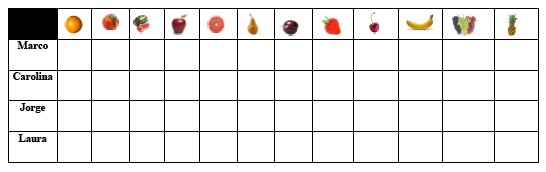
Classic Battleship in the Foreign (World) Language Classroom (French, Spanish) wlteacher.wordpress.comHere is an example of how battleships can be used to practice  clothing vocabulary and colors in Spanish.  Students place boats (filled in boxes) on the game board. Students play against another student and try to find and sink the boats of the opponent. There are pictures of clothing down the left side and colors across the top (this can also easily be done with with subjects and verbs). To choose a square, the player must say the article of clothing and the correct form of the color.   All of the necessary vocabulary (boat names, hit, sunk, miss, examples of how to say a sentence) are on the sheet for student reference. There are two grids for each player to use, one to put his/her own “boats” on and the other to keep track of the opponent.

Classic Battleship in the Foreign (World) Language Classroom (French, Spanish) wlteacher.wordpress.comDownload Battleship Games Here:

Find your Match-Speaking Activity to Practice Foreign Language Vocabulary

This is a great well to keep students in the target language while they focus on a particular vocabulary theme.  The example below using clothing.  Give slip of paper to each student with pictures of five articles of clothing.  There are 6 six pairs total.  In the example below the slips on the left are paired with slips on the right.

Students circulate in the classroom and ask each other which clothing they have (they should not look at others’ answers or show theirs).  The entire activity should take place in the target language.  The objective is to find the other person who has the exact match.  If there are more than 12 students in the class, photocopy additional slips and students need to find their group of 3 or 4 that all match.  If there is an odd number of students in the class, be sure to give a slip that matches a group.

The first group to pair up without speaking English or looking at each other’s slip wins the round.  Students can then exchange slips and play a second and third time. Before playing, review the vocabulary that students will need.

These activities can be made in a WORD document by cutting and pasting images, or you can download the activities that are already made here:

Information Gap Activities

Information Gap Activities require students to communicate with each other in order to find all the necessary information to complete the activity.  Each partner has information that the other does not.  It is very important that students have the appropriate level of language in order to complete the activity.  There is sometimes a lot of repetition in the communication as students try to narrow down the information.  This can be very useful when you want the students to focus on a particular structure.  Here is an example of an activity (El Adivino, Le Devin) where students first choose their “secret” information that their partner must then discover.

Download Information Gap Activities Here:

Foreign Language Vocabulary and Verb Form Activities-Based on Sudoku

mzl.yqsjcqhb.175x175-75I always see kids and adults working on Sudoku puzzles in books and in newspapers. I decided that I wanted to take advantage of the Sudoku craze.  I figured that if kids were into this number puzzle they could possibly transfer this enjoyment and motivation onto a Sudoku-like vocabulary activity.  I tried a few different ways of crafting it, but it got a bit complicated and the end result was that there was more of a focus on the logic than on the letters, spelling, and vocabulary.  But, I didn’t give up.

I eventually came up with a way to use the Sudoku solutions board to make a verb form activity.  Students need to find the correct verb form in the grid (there are multiple) and fill in the correct number.  When each box has a number, the student can verify his or her work by adding up each row.  The total will be 45 for each row, column and diagonal (since each line will have the numbers 1-9, which add up to 45).  Here is an example:

–Find the « je » form of the verbs « manger » and « finir » and write the number « 1 » in the box (nine number « 1 » total).  Continue with the other subjects.  To check your answers, add up the numbers in each row, column and diagonal. The total is 45.

You can easily make your own boards using the solutions to Sudoku puzzles (available in any Sudoku book or in a newspaper.  You can write the verb forms in by hand, but I find that it is easier to make a template in a Word document with the numbers so that you can just type over the number.  Make a few templates that you can use so that the numbers are not in the same places every time.  Here are a few templates to get you started or you can download some Sudoku verb activities that are already made:

Foreign Language Verb Form Puzzles

French and Spanish Verb Form Puzzles wlteacher.wordpress.com

Students enjoy working in pairs and I have found that this activity really focuses their attention on verb forms.  Essentially you fill in subjects and infinitives on one side of each line and the correct verb form on the other.  The teacher then cuts up the individual squares (or students can do it as well).  Students then must mix up and then match up the subject/verb pair with the correct verb form. When done correctly there will be a 16-square puzzle (4X4). Multiple puzzles can also be combined to make a larger  puzzle. This is a fun and effective way for students to work together to practice verb forms.  You can also use this activity to practice numbers, verb tenses or any type of vocabulary.

Foreign Language Vocabulary and Verb Form Magic Squares

I saw that some of my students were working on Magic Squares in their math classes and I saw my in.  Magic squares are a grid of 9, 16, or 25 boxes and when the numbers 1-9, 1-16, or 1-125 are inserted into the grid the total of each row, column and diagonal line is the same (15, 34 and 65 respectively).

Foreign (World) Language Verb Form Magic Squares (French, Spanish) wlteacher.wordpress.comI created verb and vocabulary activities that ask students to fill in the number of the correct answer in the grid and then when done they can add up the rows and check their work.  This has been great for all sorts of verb forms and vocabulary (pictures work really well).  The trick is to work out the number solutions on your own and to then fill in the grid.  Students really enjoy this and it works great as a pair activity as well.  Below is an example where students fill in the number of the correct subject/verb with the correct verb form.

Foreign (World) Language Verb Form Magic Squares (French, Spanish) wlteacher.wordpress.com

Who is it? Speaking Activity for the Foreign Language Classroom

Who is it? Foreign (World) Language Speaking Activity. (French, Spanish) wlteacher.wordpres.comThis game  motivates students to speak and to recall vocabulary.  Any type of thematic vocabulary can be used.

The Set -Up: Lay out abut 5 or 6 index cards or slips if paper.  Choose three vocabulary themes (numbers, colors, family, professions, verbs, etc.).  Choose one word and write it on half of the cards.  Choose another word and write it on the rest of the cards.  Do the same thing for the two remaining vocabulary themes.  Each card should have three words.  Make sure that no two cards have the same three words.

The Activity: Hand the cards out to students and have those students go to the front of the room.  Tell the rest of the students (and write on the board) all of the words that are written on the cards.  The teacher chooses one of the cards in advance and it is the class’s task to figure out who has the card by asking questions of each person who is holding a card.  They need to keep track of the information that they learn and make a guess when they think that they figured out the right person.

Keep it Communicative: Write digits,  draw lines in color, draw (print out) pictures, etc. for the cards so that students must use their own language to play the game rather than simply reading words.  Use these for the students who are asking the questions as well.

There are many variation for this activity, including more advanced questions using various tenses (the card may say “to eat-preterit” and the question would be “did you eat?”).  This can also be used several times in the same class, just switch the students and choose another card.